A Dissertation Presentation


A MARTIAL ARTS MASTER PROGRAM
by
Thien-Si Le
(Certified Fourth Degree-Black-Belt Master
&
Doctor
of Computer Science in Bigdata Analytics)
March 12, 2020
A. Title of Master
1. Philosophy and knowledge of the Mu Han
Martial Arts
Martial
Arts origin comes from human structure
in creation. Human structure consists
of (a) 4 legs to 2 legs, (b) a flexor and an extensor, (c) a voluntary muscle
and an involuntary muscle, (d) hormone. In Martial Arts development, an adaption of Martial Arts to a
residential nature environment includes a region (i.e., weather, size of land,
elevation), food source, transportation, and geographical position with enemy.
The Skill to Art is the power source
of main weapon in war from ancient time to present time through a stone age,
bronze and metal period to gun powder today.
A variety
of the Martial Arts is the rules in the artificial environment. The rules
include (a) floor material and size such as the ring, mat, etc., (b) protector,
i.e., protective gears, mouth guards, (c) permissible range of attack, and (d)
belts and ranking. Martial Arts are classified into 4 categories:
·
Martial or
military: Instant action/reaction, momentary knowledge. It is inefficient
and nonsense.
·
Martial Technique:
Constant teaching, continuous knowledge. It is efficient and making sense.
·
The Way of
Martial Arts: How to pass technique from one generation to another
generation. For example, instructor class, Taekwondo, Kung Fu, Karate, Judo,
Kendo, etc.
·
Martial Arts:
Through The Way of Martial Arts, martial technique becomes the Art. For
instance, we are the Arts.
During
learning and teaching Martial Arts, especially Tae Kwon Do (TKD), Mu Han Total
Martial Arts requires all masters, instructors and students to focus on three
principal aspects, i.e., (a) Jeong, (b) Ki, (c) Shin with Joong
Yong. To be an ideal martial artist, Mu Han recommends that students,
particularly masters, should keep in mind a good balance between these aspects
in TKD.
2. Forms
Forms are techniques, patterns or
poomsaes. In traditional martial arts, there are 18 techniques. Later, great
grand masters/founders add 6 more techniques such as bow, arrows, horse riding.
Therefore, modern martial arts have 24 techniques. Technique comprises (a)
physical technique and (b) strategy (mental technique):
a. Physical
technique: To make a strategy successful, one or more basic motions are
combined together. For example, a martial artist’s left hand block on an
opponent’s punch is followed by his back turn for a right elbow on the
opponent’s face/jaw, then the martial artist’s front turn to deliver a
roundhouse kick to the opponent’s belly. A combination of basic motions intends
to make an opponent confuse and unpredictable.
b. Strategy
is a mental technique which a martial artist can use to offense, defense,
counter-attack, protect, disable effectively the opponents. A martial artist
can use strategy on the motions at really quick momentum/inertia, actual action
with great impact or strong delivery.
For Master
Level, a candidate requires to perform:
a. World Taekwondo: Tae Baek
b. International Moon Mu Kwan: Um
Yang Soo II
c. Kung Fu: Mae Hwa Ran
d. Mae Hwa Kwon
3. Physical
Physical or
Shin is one of 3 principal aspects (Jeong (Mentality), Ki (Technique), Shin
(Physical body)) in Martial Arts. Physical is body,
physical conditions of the martial artists.
·
Mu Han Physical and Target
This aspect focuses on the requirements for testing,
including 12 hand motion sets (6 offenses, 6 defenses), poomsaes, Mu Han kicks,
and board breaking. All activities such as warm-up, sit-up, push-up, fast-paced
movement, stretch, etc. that improves the body for better kicking and punching
require a martial artist’s body strength. Martial artists need to be in top
physical shape in order to perform their best.
|
1st
Quarter |
2nd
Quarter |
3rd
Quarter |
4th
Quarter |
|
Isolated |
Flexible |
Multi Join |
Martial Arts Basics |
4. Sparring
Sparring is
essential training for martial artists because it teaches students how to use
distance to control their own attacks and defenses. It teaches blocking and
kicking techniques (actually trying to hit a target rather than just the air).
It teaches control of one's own techniques. It is testing your marital art
skills against another person in a controlled environment.
At Mu Han, sparring comprises full
contact (Olympic style), light contact, no contact and step sparring.
a. World
Taekwondo style:
b. Wushu:
c. Judo:
d. Aikido
(Step sparring)
e. Moon Mu
Kwan (Step sparring)
5. Self Defense:
Self
Defense is awareness. While Martial Arts is a study subject, Self Defense is a
survival skill. Self Defense only concerns a martial artist’s safety. On the
other hand, his/her opponent’s safety is not in concern. The knowledge of Self
Defense is not only to physically attack from someone but also how to keep
healthy mind and strong body.
Self Defense Technique is divided
into 3 objects: Men, Women and Martial
Arts joint locking principle.
a. For Men:
Awareness, Throat, Fist Swing and Tackle
b. For
Women: Awareness, Holding from the front, Holdig from the back, Ground defense,
and Escaping ground.
c. Arts
joint locking principle:
Outside
in: Shoulder and Throat
Inside
out: Throat and Wrist
High
to Low: Head
6. Teaching:
Assistant
Instructor (AI) Course: two-year program (4 semesters) for leadership students
who support all activities carried out at each do jang during class as well as
testing and special occasions or events. The AI is responsible of taking
attendance using management software from Martialytics. After 2-years training,
the assistant instructor will be graduated with a certified title Martial Arts
Instructor at Mu Han.
Instructor
is responsible of following the “2-1 Color Belt Instruction” sheet in
preparation of the class. This position is responsible of guiding and
instructing the students’ progression in requirements implementing MU Han’s
curriculum. The instructor must strive to maintain the quality of instruction
of the class as per Mu Han’s quality standards learned during the 4-semester
instructor course.. Give support to the Head Master, Director of Discipline and
Masters as per their request.
Communication
Lead Instructor (CLI) manages communications between Mu Han and the
students/parents, supports managerial activities at the dojang. CLI is
responsible for reports requested by the Head Master, as well as maintenance of
the student database Martialytics in that dojang. Give support to the Head
Master, Director of Discipline and Masters as per their request. Keep track of
trial students and report to the Head Master, Director of Discipline, Masters
and/or Lead Instructor.
Lead
Instructor (LI) oversees the general management of the dojang and instruction
of students. LI is responsible of all reports as well as maintenance of the
student database Martialytics in the dojang. Oversee that the instructors and
assistant instructors in the dojang uphold Mu Han’s values and code of respect
at all times within the school grounds and surroundings. Give support to the
Head Master, Director of Discipline, and Masters as per their request.
Masters
have responsibilities and duties similar to Lead Instructor. In addition, the
masters have more freedom to overlook and support all activities and events at
Mu Han. They may provide vision and determine the growth of Mu Han under the
guidance from the Head Master and Director of Discipline. Also, they should
find their own path in Martial Arts through Mu Han by seeing and realizing
boundary and build up standard or benchmark for subject based on the main
purpose of contact, the style of Arts, the methods and the standard of contact
power level.
B. Certifications
1. World Taekwondo Federation by Kukkiwon
World
Taekwondo Federation (WTF) is located in Seoul, Korea and established in 1973.
WTF is the international organization governing the sport of Taekwondo and it
is a member of the Association of Summer Olympic International Federation. The
Kukkiwon conducts standardized Dan promotion tests and issues black belt
certificates to Taekwondo practitioners through member nation associations of
the WTF.
2. Moon Moo Kwan Taekwondo
Moon Moo
Kwan Taekwondo (MMK), also called Professional Taekwondo, is an organization
established in 1966 to train Korean Army and Navy forces. International MMK. It
was found by Master Young Park in Korea. The IMMK certification indicates the
practitioners go a step further in their martial arts journey.
3. Jing Fu Kung Fu
Jing Fu
Kung Fu focuses on “mastering others is strength; mastering yourself makes you
fearless” Certifications of the Jing Fu Kung Fu point out that the practitioner
masters his/her technique, mentality and physical body.
4. Mu Han Total Martial Arts
Mu Han
Total Martial Arts is based on different Eastern culture strking techniques. “To
be the best of the best……!” Students all come to Mu Han with different goals
and expectation, but together we will travel the same path of discipline to
achieve all the goals the students have set and most likely more. Mu Han
conducts Black Belt promotion tests and issues Black Belt certifications to
students through Mu Han Total Martial Arts System.
C. Subject to study
1. World Taekwondo Federation style
World
Taekwondo Federation (WTF) is renowned for its involvement in international
competitions, primarily Olympics developed by General Choi. WTF is quick,
tactical, and more commercial in nature. WTF has the forms or poomsae and does
not allow punch to the face though it’s a full-contact sport.
2. Moon Moo Kwan
Moon Moo Kwan Taekwondo (MMK), also
called Professional Taekwondo, is an organization established in 1966 to train
Korean Army and Navy forces. International MMK helps TKD practitioners and
schools to expand their current curriculum with modernized martial arts skill
based on traditional movements developed by MMK founders, i.e., Master Young
Park. MMK’s striking techniques have a very exlosibve impact, rendering this
art to be used in battle rather than sports. Therefore it is only suitable for
the Special Force, West Point, President body guards, and Police 707 Special
Task Team in Korea.
3. Sip Pal Ki
Sip Pal Ki
is a Korea Martial Art first organized in 1759. It consists of a system of
eighteen traditional military practices followed in Korea. These techniques are
classified into three categories: thrust slice, and strike. They reflect the
strong influence from Chinese Martial Arts and the tactical military situatopn
of the 16th and 17th centuries, before firearms and
modern military technology replaced bladed weapons as a primary-use in the
Korean Army.
4. Kung Fu
Kung Fu was
derived from traditional Chinese martial arts. It was developed in China after
1949 in effort to standardize the practice of traditional Chinese martial arts.
The forms include basic movements such as stances, balances, jumps, sweeps and
throws,
It bases on aggregate categories of traditional Chinese
martial art style. It can be changed for competitions to highlight a
practitioner’s strengths. Modern Kung Fu competitors are increasingly training
in aerial techniques such as 540 and 720 or even 900 degree jumps and kicks to
add more difficulty and style to their forms.
5. Kum Do
Kum Do is a modern Korean martial art derived from Japanese Kendo. Kum Do means the way of the sword
or Korea martial arts based upon swordsmanship in 1927.
Kumdo
practitioners generally favor a dynamic style of play, focusing on using fast,
aggressive, and effective small motion strikes to create openings for attacks
more in line with battlefield use.
D. Testing for 4th
Dan
1. Eligibility
To be
eligible for Sa Dan promotion test, a martial artist must satisfy 3 conditions:
a. Mu Han 3rd
Dan: A martial artist must have Mu Han Sam Dan.
b. Four
years in training and practice: Fully completed eight semesters
c. Over
24-years-old
2. Focus Training Period
a. 6 months
in training focuses on 3 principal aspects: Mind, Body, and Technique
b. Video
recording each month
|
6-Month Focus Training |
||||||
|
Aspects |
1st |
2nd |
3rd |
4th |
5th |
6th |
|
Mind |
Origin of Martial
Arts |
Basic Knowledge |
History of Martial
Arts |
Conditions to live,
culture and Martial Arts |
Select subject of
Essay |
Writing Essay |
|
Body |
Isolated |
Flexible |
Multi Join |
Multi Join |
Flexible |
|
|
Technique |
Moon Moo Kwan |
Moon Moo Kwan |
Sip Pal Ki Kung Fu |
Taekwondo |
All |
|
3. Subject to Training
All
requirements
4. Division of Intensity
- Senior:
Less than 39 years old
- Mid senior:
Less than 55 years old
- Golden
Senior: 55 years old or more
5. Actual Schedule
Note: Subject
to be changed every Testing
|
Training Schedule |
||
|
Days |
Dojang |
Time |
|
Monday |
Taunton |
6:40 PM – 7:30 PM |
|
Tuesday |
N. Attleboro |
6:20 PM – 8:00 PM |
|
Thursday |
Franklin |
6:20 PM – 8:00 PM |
|
Meeting |
Taunton |
30 Minutes after every Taunton Color Belt Testing |
|
Summer |
Outdoor Training |
2 nights and 3 days (To be determined date and location) |


Sĩ Quan Hải Quân Việt Nam Cộng Hòa (HQ/VNCH) : Họ là ai ?
Sĩ Quan HQ/VNCH gồm nhiều thành phần:
- SQ HQ Hiện Dịch : Họ được vào Trường Võ Bị Liên Quân 4 năm. Học đến năm thứ 3 thì được chuyển sang TTHLHQ/NT để học về hải nghiệp 3 tháng vào mùa hè, rồi trở lại Võ Bị học và thi ra trường. Họ được học 4 năm và ra trường với câp bậc thiếu úy hiện dịch
- SQ HQ học từ trường HQ Pháp Brest: SQ HQ được huấn luyện bởi Pháp về VN đa số nắm giữ các chức vụ quan trọng trong HQ
- SQ HQ xuất thân từ TTHLHQ/NT Trường SQHQ/VNCH- Đây là các SQ trừ bị ký giấy tờ phục vụ HQ 5 năm. Nhóm SQ HQ này gồm 2 ngành : Chỉ Huy về hành quân biển và Cơ Khí. Học trình 2 năm sau này do nhu cầu chiến tranh nên giảm còn 1 năm. Nhóm SQ này khá hổn tạp : Tối thiểu Tú Tài II từ các trường trung học phổ thông, Kỹ Thuật, Mỹ Thuật, Nông Lâm Súc, Khoa Học, Y Khoa.... - Họ ra trường với cấp bậc chuẩn úy, 1 năm sau sẽ lên thiếu úy. Riêng các khóa học tại TTHLHQ/NT 2 năm ra trường mang lon thiếu úy trừ bị.
- SQ HQ Chiến Binh : Được tuyển từ Trường Võ Khoa Thủ Đức phải có Tú Tài II trở lên. Họ thường nắm các chức vụ như an ninh, nội vụ,...
- SQ Đoàn Viên : Đây là các đoàn viên có Tú Tài II học làm SQ HQ. Nhóm này có học ít nhất là đã có Tú Tài I, tay nghề cứng về các ngành nghề trong HQ như Giám Lộ Vận Chuyển, Truyền Tin, Cơ Khí, Điện Khí, ...
- Hàng Hải Thương Thuyền: Có Tú Tài I học 2 năm ở trường Cao Đẳng HHTT ở Trung Tâm Kỹ Thuật Phú Thọ ra cán sự HHTT được tuyển vào Hải Quân
- OCS Offcicer Candidate school : Tú Tài II khá Anh Văn được tuyển chọn thụ huấn ở trường HQ OCS ở Rhode Island . Nhóm này được học 6 tháng về hành quân sông thường được đưa về các giang đoàn - Ra trường mang cấp bậc Chuẩn Úy, 1 năm sau lên thiếu úy
- AOCS : Austalian OCS - tương tự như nhóm OCS vì nhu cầu được huấn luyện bởi HQ Hoàng Gia Úc
- Khóa Sĩ Quan Đặc biệt để các sĩ quan các ngành nghề về học bổ túc hải nghiệp
- HQ/VNCH có 1 sĩ quan VN được học ở US Naval Academy
Annapolis : Trần Minh Trực, con của Tư Lệnh Trần Văn Chơn


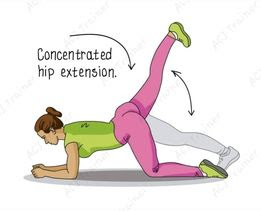
Daily practicing about 0.5 hour to 1 hour :
Instructions:
- Control your own technique
- Follow each step properly
- Hold each step 10 seconds or count from 1 to 10 slowly.
- Repeat each step a few times if necessary
- Keep all steps persistently
- Normal Breathing: Inhale by nose deeply / Exhale by mouth
fully
Photo Courtesy: Yoga Experts & Martial Arts Masters